Ben Fischer · 17 September 2026
Classifying Digital Thresholds: How Entry Classifications Affect Visitor Behavior in Web Environments
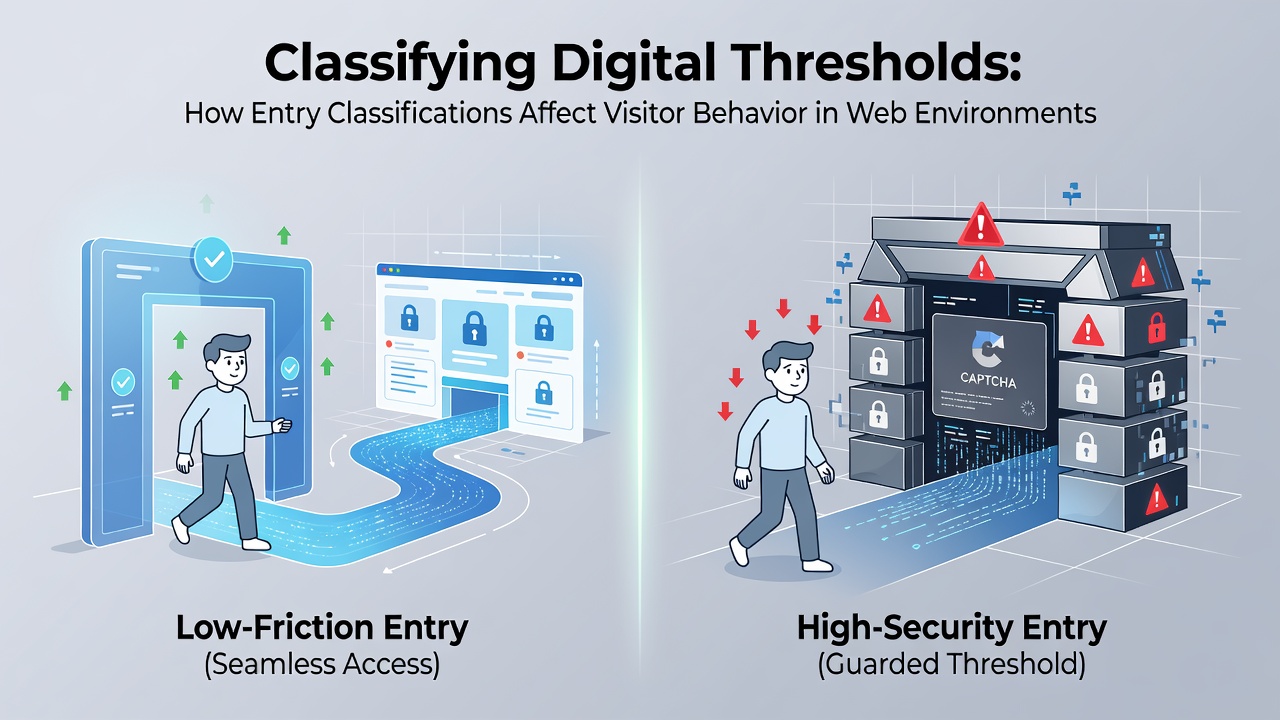
Digital environments feature multiple entry classifications that organizations use to manage access, and these thresholds determine how visitors progress through websites based on the barriers they encounter at the outset. Researchers categorize these thresholds into levels ranging from fully open access to strict authentication requirements, with each type producing measurable differences in initial engagement metrics. Data from web analytics platforms shows that open thresholds generate higher immediate page views, whereas registration gates reduce entry volume but increase the quality of subsequent interactions once visitors clear the barrier.
Types of Entry Classifications in Web Systems
Web operators implement entry classifications that fall along a spectrum, and open access allows unrestricted viewing while soft gates require minimal actions such as providing an email address before deeper content becomes available. Hard thresholds demand account creation or payment, and these distinctions influence how algorithms allocate crawl resources and how users decide whether to proceed. Studies from academic institutions indicate that hybrid models combining elements of soft and hard gates appear in subscription services, where partial previews precede full login requirements, creating layered decision points that affect drop-off rates at each stage.
Classification frameworks often incorporate behavioral signals, and systems adjust thresholds dynamically based on visitor location, device type, or referral source. Government reports on digital access patterns reveal that regional regulations shape these implementations, with data protection rules in the European Union prompting more transparent consent flows compared to frameworks used elsewhere. Observers note that September 2026 updates to certain international data standards may further standardize how thresholds collect and process user information across borders.
Measured Effects on Visitor Progression and Retention
Entry classifications directly alter visitor behavior, and quantitative analyses demonstrate that higher thresholds correlate with lower bounce rates among those who enter yet reduced overall traffic volume. Research conducted by university teams tracking thousands of sessions found that soft gates filter out casual browsers while retaining users more likely to complete goal actions such as newsletter signups or purchases. In contrast, fully open sites attract broader audiences but experience faster exits when content fails to match expectations quickly.
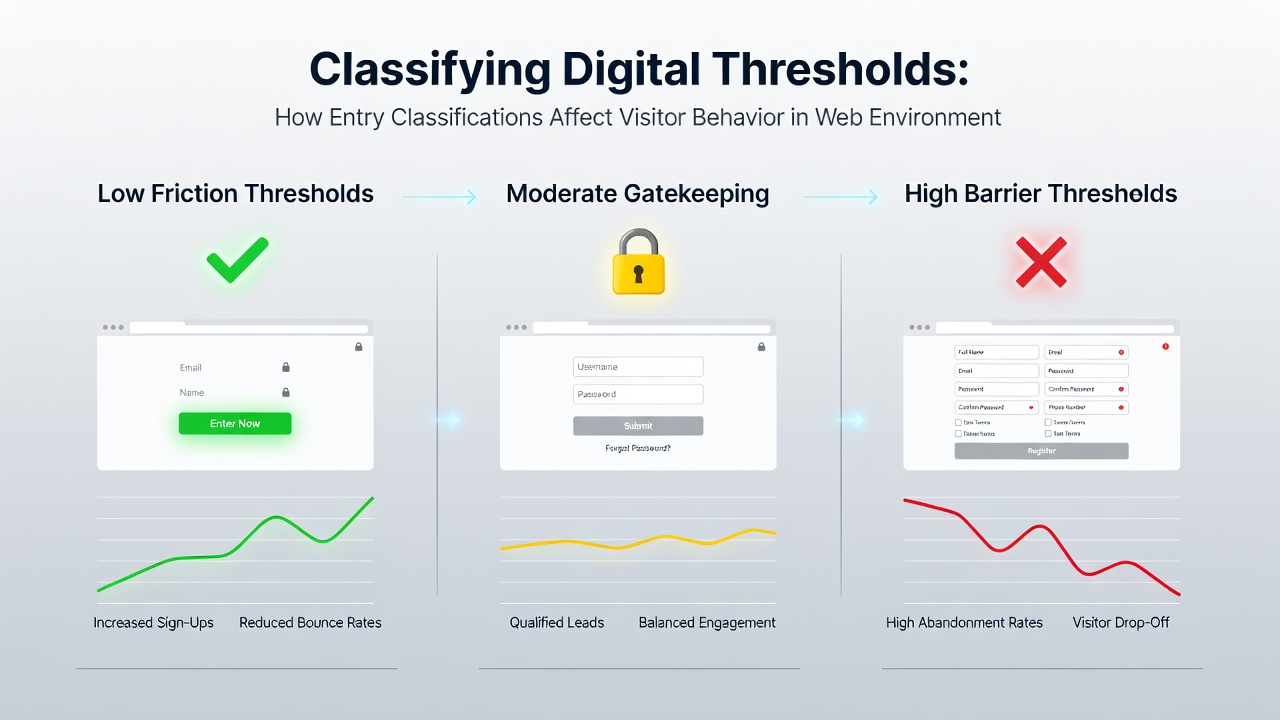
Longer multi-step thresholds introduce friction that compounds over time, and session recordings indicate visitors abandon journeys when authentication processes exceed three clicks or require repeated data entry. Industry reports compiled by research organizations across North America and Australia show that mobile users exhibit greater sensitivity to these friction points than desktop visitors, leading to disproportionate drop-offs on smaller screens. Those who study conversion funnels observe that A/B tests consistently highlight the trade-off between quantity of entrants and depth of engagement once classification requirements are met.
Factors Modulating Threshold Impact
Contextual elements interact with entry classifications to shape outcomes, and content relevance plays a central role in whether visitors tolerate higher barriers. Data indicates that visitors arriving via targeted search queries tolerate registration gates more readily than those from social referrals, because intent levels differ at the point of arrival. Device capabilities, network speeds, and prior familiarity with a domain also contribute to tolerance thresholds, according to aggregated telemetry from large-scale web monitoring services.
Seasonal patterns emerge in some sectors, and e-commerce platforms adjust classification strictness during promotional periods to balance traffic volume against conversion quality. Academic papers examining longitudinal datasets reveal that repeated exposure to the same threshold type trains users to anticipate friction, which can either streamline future visits through muscle memory or increase preemptive exits among those seeking instant information.
Analytical Approaches to Threshold Evaluation
Organizations evaluate entry classifications through controlled experiments that isolate variables while measuring downstream metrics such as time on site, pages per session, and return frequency. Reports from Canadian digital policy groups emphasize the importance of tracking not only entry success rates but also post-threshold satisfaction scores gathered through surveys. These combined datasets allow precise mapping of how each classification level influences the full visitor journey rather than isolated arrival events.
Tools that simulate different threshold scenarios help predict behavioral shifts before live deployment, and machine learning models trained on historical interaction logs improve the accuracy of these forecasts. Evidence from multiple research institutions demonstrates that continuous monitoring remains essential because visitor expectations evolve alongside changes in competing platforms and interface standards.
Conclusion
Entry classifications function as structural controls within web environments, and the data consistently shows they shape visitor behavior from the first interaction onward. Organizations that align threshold types with audience intent and technical context achieve more predictable progression patterns through their sites. Ongoing analysis of these classifications provides the foundation for refining access strategies as digital landscapes continue to develop.